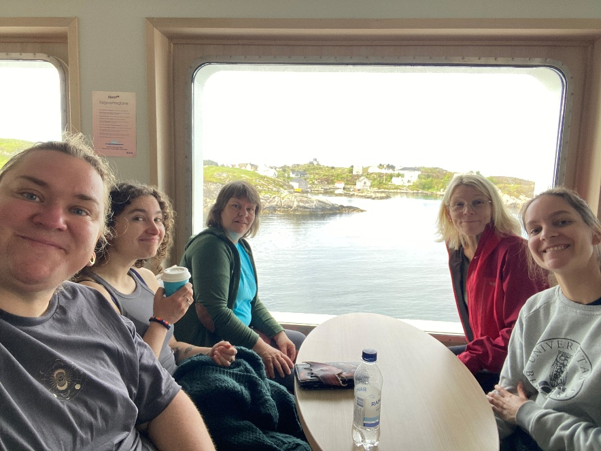
Participants of the first European Specify Summit gathered in Oslo. The event brought together current and future Specify users from across Europe to exchange experiences and strengthen the growing European community
During the last weekend of September, UniMus:Natur, together with the Specify Collections Consortium, organized the very first European Specify Summit.
With support from colleagues at the Natural History Museum in Oslo, we welcomed participants from across Europe, including both current Specify users and institutions interested in implementing the system in the future. Attendees travelled from countries such as Denmark, Croatia, Spain, and many more, highlighting the growing European interest in the Specify platform and community.
Over two days, participants took part in presentations, discussions, and workshops covering topics such as community goals, governance, working group initiatives, and future directions for Specify in Europe. The summit provided a valuable opportunity to share experiences, discuss common challenges, and learn from one another’s successes and lessons learned.
Impressions from the Specify Summit. Photo: CR, unknown
For me personally, one of the highlights was the opportunity to meet both familiar and new faces. It was inspiring to connect with colleagues from other museums, exchange knowledge and ideas, and see the enthusiasm for building a stronger European Specify community. The conversations throughout the summit demonstrated how much we can achieve by working together and sharing expertise across institutions and countries.
The main focus of the summit was to explore the benefits of being part of a European Specify network and to identify ways in which the community can support both current and future users. The strong engagement from participants made it clear that there is great potential for collaboration in the years ahead.
The first European Specify Summit was an important milestone, and I left feeling energized by the connections made and the ideas shared. A big thank you to everyone who participated and helped make the event a success. I am already looking forward to meeting everyone again at the next summit!
Dramatic landscapes are a common sight in Lofoten. Photo: Simon Henriksson
Spring and summer are the busiest seasons for fieldwork, and our PhD candidate Elena Schrofner-Brunner is no stranger to long days spent searching for algae along Norway’s coastline. Over the past moths, she has sampled sites from southern Norway to the far north, but few places have left as strong an impression as the breathtaking landscapes of Lofoten.
For many people, Lofoten is known for its dramatic mountains, white beaches, fishing villages, and midnight sun. For phycologists, however, the region also offers a unique opportunity to explore marine biodiversity in one of Norway’s most spectacular coastal environments.
Elena, both above and below the water, sampling at different sites across the Lofoten Islands. Photos: SH
As Elena describes it: “Beyond the Arctic Circle, life is a little different. It is harsher, colder, rawer. Nevertheless, there is an often unexpected diversity to be found. Organisms have discovered ways to withstand these challenging conditions, and many species extend far beyond this thin but important line on the globe. Among them are the seaweeds, which is why we ventured north to explore the green macroalgae of Lofoten and Bodø. With water temperatures as low as 8°C in July and frequent heavy rain, it certainly was not always easy, but we did everything in our power to unravel their diversity.”
Fieldwork in northern Norway is rarely straightforward. The weather can change rapidly, sampling sites may be difficult to access, and long hours are often spent working in cold water and exposed coastal habitats. Yet these challenges are precisely what make exploring remote regions so rewarding. Every sampled shoreline helps us better understand how species are distributed across Norway’s vast and environmentally diverse coastline.
The Lofoten expedition forms part of Elena’s PhD project, funded by the Norwegian Taxonomy Initiative (Artsdatabanken 86-25). The project represents one of the most comprehensive surveys of marine green algae ever undertaken in Norway. Together with project leader Sophie Steinhagen, Elena is collecting samples from all Norwegian marine ecoregions, ranging from the Skagerrak in the south to the Arctic waters around Svalbard, and across multiple seasons.
To ensure broad species coverage, sampling was also conducted in harbours and marinas throughout Lofoten. Photos: SH
The goal is not only to collect specimens but also to improve our understanding of Norway’s green algal diversity using a combination of traditional taxonomy and modern molecular approaches. Many green algae are notoriously difficult to identify based on appearance alone. Some species look nearly identical despite being genetically distinct, while others can vary considerably depending on their environment. By combining careful morphological studies with DNA-based analyses, the project aims to reveal previously overlooked diversity and provide a more accurate picture of Norway’s marine flora.
The material collected during these expeditions will be used to strengthen genetic reference libraries, improve species identification, and connect today’s observations with historical herbarium collections. This work will provide an important foundation for future biodiversity research, conservation efforts, and long-term monitoring of marine ecosystems.
Trips such as the one to Lofoten remind us that biodiversity research often begins with wet boots, cold hands, and a willingness to explore remote corners of the country. Behind every DNA sequence and database record lies a field expedition, and often a good story. For Elena, the rugged coastlines of Lofoten provided both.
The iconic, sharply peaked mountains reflect the relatively young geological age of the Lofoten Islands. Photo: SH.
Feiring etter kunngjøringen om 80 millioner kroner til Realfaghøyden. Foto: Thor Brødreskift/UiB.
Regjeringens forslag til statsbudsjett for 2027 inneholder en oppstartbevilgning på 80 millioner kroner til prosjektet UiB Realfaghøyden, som omfatter rehabilitering av både Realfagbygget og Fysikkbygget ved Universitetet i Bergen.
Prosjektet er en del av en større satsing på å modernisere forsknings- og undervisningsinfrastrukturen innen realfag og teknologi ved universitetet. Bygningene har passert sin tekniske levealder, og rehabiliteringen er nødvendig for å sikre framtidig forskning, undervisning og forvaltning av vitenskapelige samlinger.
For herbariet er nyheten av særlig stor betydning. Samlingene som oppbevares i Realfagbygget representerer flere hundre år med dokumentasjon av plante-, sopp- og algemangfold fra Norge og resten av verden. Disse samlingene er en uerstattelig ressurs for forskning, undervisning og naturforvaltning.
Moderne og sikre lokaler er avgjørende for å bevare samlingene for framtidige generasjoner. Rehabiliteringen vil bidra til bedre forhold for oppbevaring, arbeidsmiljø og tilgang til materialet, samtidig som den legger til rette for videre digitalisering og forskning.
Oversiktsillustrasjon over Realfaghøyden. Foto Arkitektgruppen CUBUS AS
UiB beskriver Realfaghøyden som Norges største satsing på realfag og teknologi, og prosjektet omfatter både rehabilitering av eksisterende bygg og etablering av et nytt avlastningsbygg som skal sikre kontinuitet i aktivitetene under byggeperioden.
For oss som arbeider med naturhistoriske samlinger, er dette derfor ikke bare en investering i bygninger, men også en investering i kunnskapen og kulturarven som samlingene representerer. Bevilgningen markerer et viktig steg mot å sikre herbariets framtid ved Universitetet i Bergen.
This September, I had the opportunity to participate in the course “Modern Approaches to Macroalgal Taxonomy and Phylogeny”, held at the Espegrend Marine Research Field Station outside Bergen. The course brought together students and researchers interested in macroalgal diversity and provided a week-long immersion into both classical and modern approaches to algal taxonomy.
Ocean view from the Marine Biological Station in Espegrend, Bergen. Photo: CR
BIOCORE?
The course was organized through BIOCORE (Biodiversity Collections and Research Education), a national graduate research school led by Norway’s four university natural history museums. BIOCORE aims to train the next generation of biodiversity researchers by combining collections-based research with modern methods in taxonomy, molecular biology, biodiversity informatics, and science communication. The program offers specialized courses, workshops, networking events, research exchanges, and opportunities for collaboration across institutions and disciplines.
A particular strength of BIOCORE is its focus on natural history collections as a foundation for biodiversity science. By combining fieldwork, laboratory methods, digitization, and data analysis, the research school helps equip early-career researchers with the diverse skill set needed to address today’s biodiversity challenges. BIOCORE is open to researchers and students with an interest in biodiversity science. Associate Membership is available to anyone, regardless of career stage or location, and provides access to courses, workshops, webinars, networking opportunities, and newsletters. Those interested in becoming members can find more information on the BIOCORE Membership page.
Modern Approaches to Macroalgal Taxonomy and Phylogeny
The one-week course was designed to introduce participants to state-of-the-art methods in macroalgal taxonomy and phylogeny. Through a combination of lectures, field excursions, practical laboratory exercises, and discussions of ongoing international research projects, participants explored how modern phycologists identify, classify, and study marine macroalgae.
The program covered a wide range of topics, including species identification, ecological functions of macroalgae, DNA sequencing, phylogenetic analyses, species delimitation methods, environmental sequencing, and recent advances in algal classification. Participants also had the opportunity to collect specimens in the field and apply newly learned methods during laboratory sessions.
One of the highlights of the course was the opportunity to learn from an outstanding group of internationally recognized experts in algal taxonomy and systematics. The teaching team included Juliet Brodie (Natural History Museum, UK), Olivier De Clerck (Ghent University, Belgium), Franz Goecke (Norwegian University of Life Sciences, Norway), Frederik Leliaert (Meise Botanic Garden, Belgium), Markus Molis (UiT The Arctic University of Norway), Kjersti Sjøtun (University of Bergen), and Heroen Verbruggen (Spanish Institute of Oceanography). Their expertise covered a remarkable breadth of macroalgal diversity, from ecology and morphology to genomics and evolutionary biology.
The course also showcased several ongoing research initiatives focused on Norwegian macroalgal biodiversity and demonstrated how traditional taxonomy and molecular approaches are increasingly being integrated to better understand algal diversity and evolutionary relationships.
Plenty of course materials were available to assist with species identification. Photo: CR
Meeting Point at the Marine Research Station in Bergen
The course took place at the Espegrend Marine Research Field Station. It was well organized, with accommodation and all meals provided on site. This created a relaxed and welcoming environment where participants could focus entirely on learning while also getting to know one another outside the classroom.
The course attracted a diverse group of students and professionals with backgrounds ranging from ecology and taxonomy to molecular biology. It was a fantastic opportunity to meet people working on different aspects of biodiversity research and to exchange ideas and experiences. For me personally, it was also the first time meeting several internationally renowned researchers in algal taxonomy and phylogeny whose work I had previously only encountered through scientific publications.
During the week, there was a strong focus on algal phylogenetics. While I have worked with algal collections and taxonomy, the course provided a much deeper understanding of how DNA-based methods are used to reconstruct evolutionary relationships and resolve taxonomic questions. The combination of lectures and practical exercises helped connect theoretical concepts with real-world applications in modern phycology.
Juliet Brodie demonstrating algae pressing techniques. Photo: CRPhD candidate Elena Schrofner-Bruner presenting her PhD topic. Photo CRFranz Goecke presenting an overview of Norwegian macroalgae. Photo: CR
Another highlight was a presentation by PhD candidate Elena Schrofner-Bruner, who introduced her research project at the University of Bergen on the diversity of green macroalgae in Norway. Hearing about ongoing research efforts and discussing methods with other participants added another valuable dimension to the course.
An additional bonus was the opportunity to receive algal material from Franz Goecke for the herbarium collections. The specimens have since been curated and digitized, contributing to the continued development of our collections. The digitization of the algal collections at the University Museum of Bergen deserves its own story, however, and will be the subject of a future blog post.
Overall, the course was an excellent experience. It combined high-quality teaching, inspiring discussions, hands-on learning, and a welcoming atmosphere in beautiful surroundings. I left Espegrend with new knowledge, new professional contacts, and an even greater appreciation for the fascinating diversity of macroalgae. Most importantly, the week demonstrated the value of initiatives such as BIOCORE, which create opportunities for researchers at different career stages to learn from one another and build lasting scientific networks.
Natural history museums are home to millions of objects and specimens, ranging from plants and fungi to animals, fossils, and geological collections. Managing such vast collections requires robust digital infrastructure. Collection management systems help museums keep track of what their collections contain, where individual objects are stored, when new material is added, and how specimens can be made accessible for scientific research and public use.
In 2025, five Norwegian natural history institutions, the University Museum of Bergen, the Natural History Museum in Oslo, NTNU University Museum in Trondheim, the Arctic University Museum of Norway in Tromsø, and the Botanical Gardens at the University of Agder, initiated a collaborative effort known as UniMus:Natur. The goal of the initiative is to establish a shared collection database and management system that can support the long-term digitization, management, and accessibility of Norway’s natural history collections.
After a careful evaluation of available solutions, the consortium selected Specify, a community-governed, open-source platform designed for managing biological and geological collections. Specify is used by research collections, museums, universities, and biodiversity repositories around the world to curate specimens, track loans and accessions, manage taxonomy, and publish collection data for research and public access. Today, the platform serves hundreds of collections across more than 20 countries and supports the publication of millions of specimen records through international biodiversity infrastructures such as GBIF.
Although the current Specify Collections Consortium was established in 2018, the software itself has a much longer history. Its origins can be traced back to biodiversity informatics initiatives at the University of Kansas in the United States, with more than 30 years of continuous development and collaboration with natural history collections. Today, the consortium is governed by its member institutions, ensuring that future software development is driven by the needs of collection managers, curators, and researchers.
To support the implementation of the new system in Norway, three members of the Specify team travelled from the United States to Oslo from 16 to 18 September to deliver an intensive workshop for key users from the participating institutions. Over three days, participants received detailed instruction on the functionality of the platform, data migration, collection workflows, and customization options. The workshop also provided an opportunity to discuss the practical challenges associated with moving large and historically complex collections into a shared digital environment.
Impressions of the workshop. Photos CR
Beyond the technical training, the workshop was a valuable opportunity to meet colleagues from museums across Norway who are working with similar collections and facing many of the same challenges. The atmosphere was highly collaborative, with participants openly sharing experiences, ideas, and solutions. For many of us, the workshop provided not only a deeper understanding of Specify’s capabilities but also a clearer picture of how we can work together to improve collection management and data accessibility on a national scale.
Workshop participants covering all five institutions. Photo ER
Overall, the workshop was an extremely positive experience. We learned a great deal about the new platform, gained practical skills that will help with its implementation, and strengthened connections between the institutions that will be using it. As UniMus:Natur moves forward, these collaborations will be just as important as the technology itself in ensuring that Norway’s natural history collections remain well curated, accessible, and relevant for future research.
Stunning view from Saltö island located next to Tjärnö overviewing Kosterhavet National Park. Photo CR
Marine green algae are a vital component of coastal ecosystems, providing food, habitat, and oxygen for a wide range of marine organisms. Despite their ecological importance, however, many species remain surprisingly understudied. Some species look almost identical despite being genetically distinct, while others can vary greatly in appearance depending on environmental conditions. As a result, traditional methods of species identification are often not enough to accurately capture the true diversity of these organisms.
Tjärnö Marine Biological Station by night. Photo CR
Marine green algae are a vital component of coastal ecosystems, providing food, habitat, and oxygen for a wide range of marine organisms. Despite their ecological importance, however, many species remain surprisingly understudied. Some species look almost identical despite being genetically distinct, while others can vary greatly in appearance depending on environmental conditions. As a result, traditional methods of species identification are often not enough to accurately capture the true diversity of these organisms.
This challenge is particularly relevant in Norway, where several groups of green algae play important ecological roles and are attracting growing interest for research and biotechnology. Yet many species are still poorly represented in international genetic reference databases, making it difficult for scientists to identify them accurately and monitor changes in biodiversity over time.
Ongoing cultivation of different species of algae inside Tjärnö MBS. Photo CRInside the lab at the Marine Biological Station. Photo CR
To address these knowledge gaps, Elena Schrofner-Brunner’s PhD project, funded by the Norwegian Taxonomy Initiative (Artsdatabanken 86-25), is undertaking one of the most comprehensive surveys of marine green algae ever conducted in Norway. Together with project leader Sophie Steinhagen, Elena is sampling populations across all Norwegian marine ecoregions, from the Skagerrak in the south to the Arctic waters around Svalbard, and across multiple seasons. By combining traditional taxonomy with modern DNA-based approaches, the project aims to create a much clearer picture of Norway’s green algal diversity.
The collected material will help strengthen existing genetic reference libraries, improve species identification, and bridge the gap between historical herbarium collections and present-day observations. Ultimately, this work will provide an important foundation for future biodiversity research, monitoring, and conservation efforts.
Given the ambitious scale of the project, I was invited to join Elena and Sophie at the Tjärnö Marine Laboratory on Sweden’s west coast. Following a very successful summer of fieldwork, there was no shortage of material to process. By the time I arrived, hundreds of samples were waiting for laboratory analysis.
My primary task was assisting with DNA extraction. In total, around 500 samples needed to be processed before genetic analyses could begin. While DNA extraction may sound routine, maintaining consistency and careful documentation across such a large number of specimens requires considerable attention to detail. It was rewarding to contribute to this crucial step in generating the molecular data that will ultimately help uncover the hidden diversity of Norway’s marine green algae.
Although the workdays were long, they were equally enjoyable. Tjärnö Marine Laboratory is located in a spectacular coastal setting near Kosterhavet National Park, Sweden’s first marine national park. Established in 2009, the park protects one of the country’s most species-rich marine areas, encompassing the waters and archipelago around the Koster Islands. The unique oceanographic conditions of the Skagerrak support thousands of marine species, making the region a true hotspot for marine biodiversity.
A snorkel trail laid out to get close to the Kosterhavet National Parks marine inhabitants. Photo CR
After spending the day in the laboratory, it was wonderful to step outside and explore the surrounding coastline. Walks along the rocky shores provided a welcome contrast to hours spent processing samples and offered a firsthand glimpse of the environments that support such a rich marine flora and fauna.
One of the highlights of my stay was a visit to the local Tjärnö Aquarium. Although modest in size, it is renowned as Sweden’s most species-rich aquarium, housing more than 200 species of marine animals and algae from the surrounding waters. The exhibits recreate a variety of local habitats, from eelgrass meadows and kelp forests to cold-water coral reefs, giving visitors a unique insight into the underwater world of the Skagerrak and Kosterhavet region.
Cold water soft corals on display at the local Tjärnö Aquarium. Photo CR
Located next to Tjärnö is the island Saltö, which is one of the many islands part of the Kosterhavet National Park . Photo CR
For someone spending most of the day working with algae samples and DNA extractions, it was fascinating to see many of these organisms presented in their ecological context. The aquarium showcases an incredible diversity of marine life, including fish, crustaceans, echinoderms, and seaweeds. A particular highlight was the touch pool, where visitors can interact with species such as sea cucumbers and starfish. The close connection between the aquarium and the research conducted at Tjärnö Marine Laboratory makes it an excellent example of how science can be communicated to a wider audience.
Together, the aquarium visit, the evening walks, and the proximity to Kosterhavet National Park served as a reminder of why documenting and understanding marine biodiversity is so important. As Elena’s project continues to expand its sampling efforts from southern Norway to Svalbard, the material collected and processed during these weeks will play an important role in improving our understanding of Norway’s marine green algae.
It was a privilege to contribute to such an exciting initiative. Beyond the scientific work, the experience provided an opportunity to learn from colleagues, explore a remarkable marine environment, and gain a deeper appreciation for the diversity hidden beneath the surface of our coastal waters. I look forward to following the discoveries that emerge from this growing dataset in the years to come.
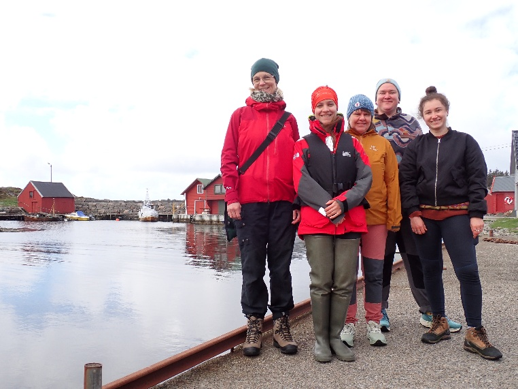
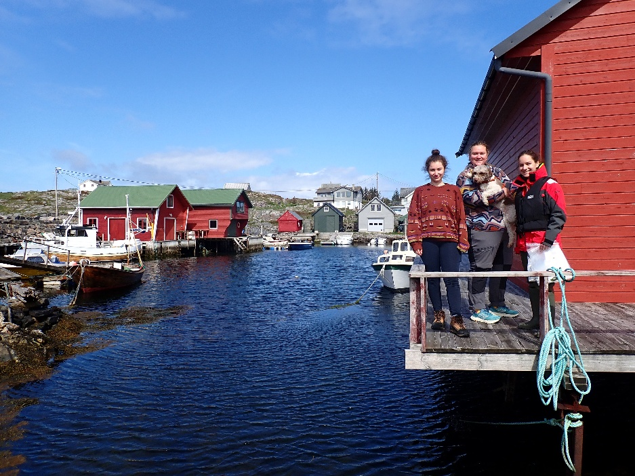
At the end of spring, we had the pleasure of carrying out our very first joint fieldwork trip as an herbarium team. For three days and two nights, we stayed on the beautiful island of Fedje, just off the coast of Bergen, combining field sampling, teamwork, and a welcome dose of Norwegian coastal sunshine.
A Team Effort
This trip brought together colleagues from across the herbarium. From the vascular plant group, Jenny Smedmark and Solfrid Hjelmtveit joined us, while the cryptogam team was represented by Sophie Steinhagen, Elena Schrofner-Brunner, and Cessa Rauch. The focus for this expedition was on green algae, an important but often overlooked component of biodiversity.
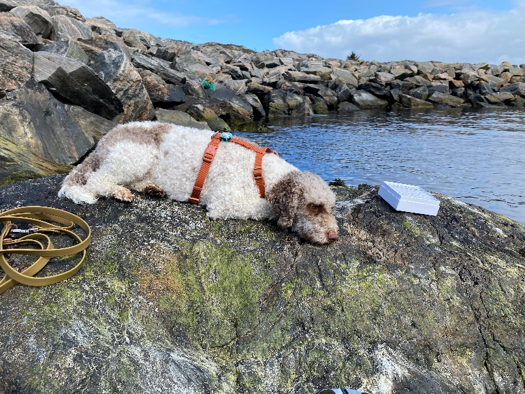
We were also accompanied by Sophie’s small dog, Coco, who proved to be an enthusiastic (and very popular) field assistant, boosting morale and keeping us company throughout the trip.
Sampling Around the Island
Over the course of the trip, we sampled from around five different locations across Fedje. The island, with its varied coastal habitats, provided an excellent setting for collecting green algae, offering a diversity of environments within a relatively small area.
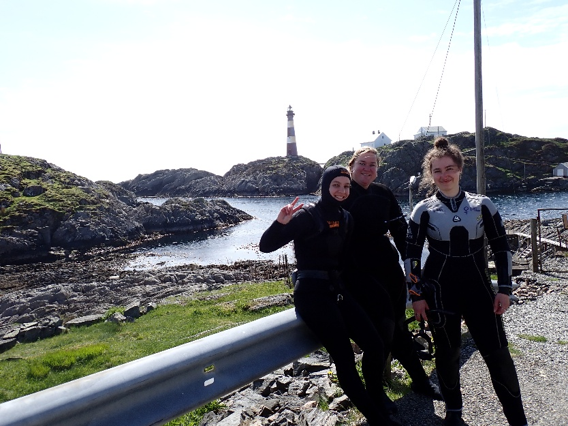
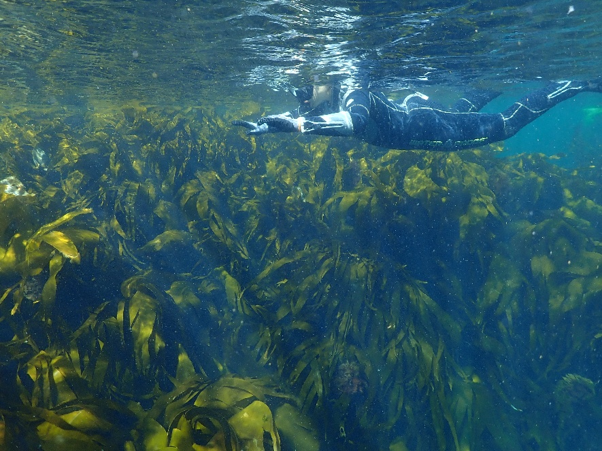
On the second day, we took the fieldwork a step further by going snorkelling around the lighthouse at Fedje. This allowed us to access submerged habitats and ensure more comprehensive coverage of green algae diversity in the area. Sampling below the surface added an exciting dimension to the work and helped maximize the range of species collected.
In total, we collected 120 green algae samples, which will become an important part of Elena’s PhD research and eventually part of the cryptogam collections. Elena’s project focuses on understanding green algae biodiversity in Norway, and these specimens will contribute valuable data to map species diversity and distribution.
Fieldwork and Collaboration
Beyond the practical work of collecting samples, the trip was also a great opportunity for collaboration and knowledge exchange between the vascular plant and cryptogam groups. Sharing perspectives in the field, discussing methods, and simply working side by side helped strengthen connections across disciplines. Field trips like this highlight how much can be gained from stepping outside the lab and into the natural environment we study.
Life on Fedje
Fedje itself proved to be a perfect base for our work; a small island with a strong coastal character, open landscapes, and easy access to sampling sites. Spending a few days there allowed us to combine focused work with the experience of being immersed in the field. Evenings were spent reviewing samples, discussing findings, and enjoying the calm surroundings after long but rewarding days outdoors.
A Strong Start
This first joint fieldwork trip was a success on many levels: scientifically productive, socially enjoyable, and an excellent starting point for future collaboration within the herbarium.
With valuable material collected for ongoing research and strengthened connections between colleagues, the trip to Fedje marks the beginning of what we hope will be many more shared expeditions. And of course, with Coco’s enthusiastic participation, we may already have established a tradition of four-legged field assistants.
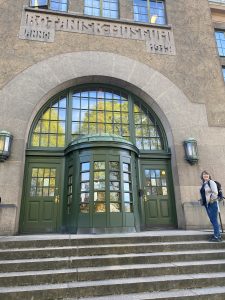
I slutten av april fikk vi anledning til å besøke herbariet ved Naturhistorisk museum i Oslo, en liten faglig utflukt som viste seg å bli både inspirerende og lærerik.
Bakgrunnen for besøket var at vi allerede befant oss på Østlandet i forbindelse med Specify-seminaret på Gardermoen. Sammen benyttet vi derfor anledningen til å ta turen inn til Oslo for å få et innblikk i hvordan de jobber med kryptogamsamlingene ved museet.
Møte med fagmiljøet
Ved ankomst ble vi tatt imot av professor Einar Timdal og overingeniør Siri Rui, som er ansvarlig for kryptogamsamlingene. Det var svært spennende å få møte dem og høre direkte om arbeidet deres med disse viktige, men ofte litt undervurderte organismene.
Kryptogamer (som inkluderer blant annet lav, moser, alger og sopp) spiller en avgjørende rolle i økosystemene våre, og samlingene ved museet representerer en betydelig vitenskapelig ressurs. Det var tydelig at både kompetansen og engasjementet rundt samlingene er høyt.
Innblikk i samlingene
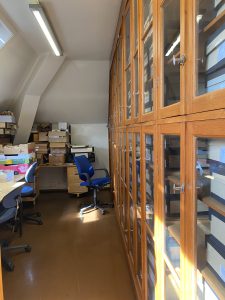
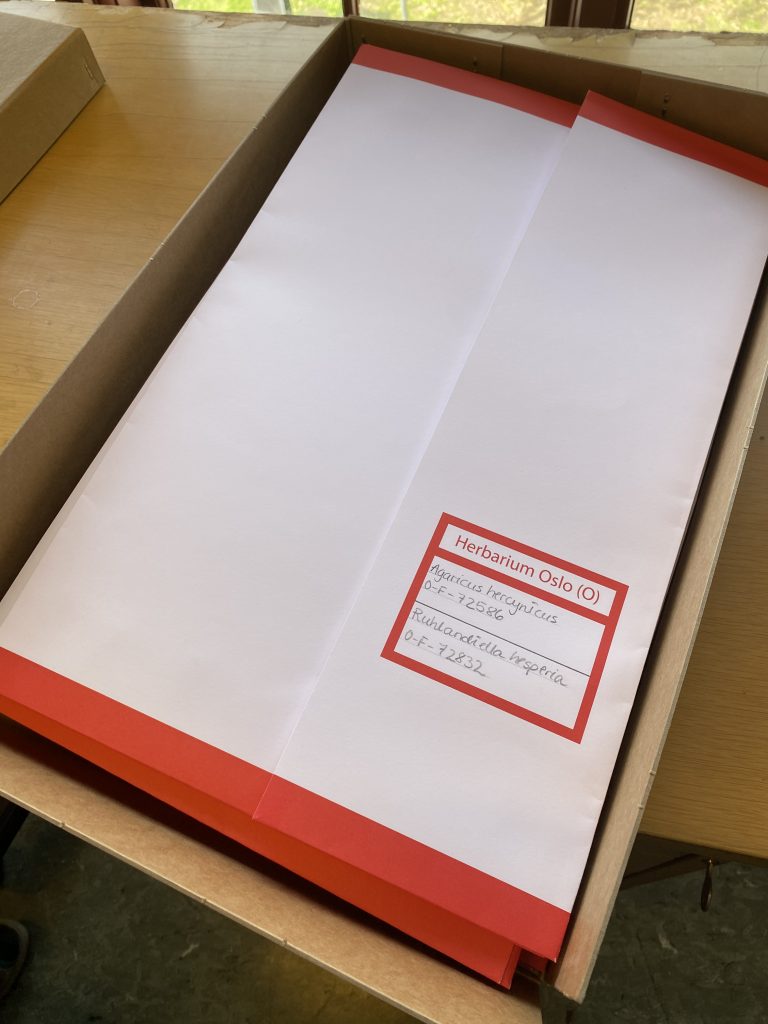
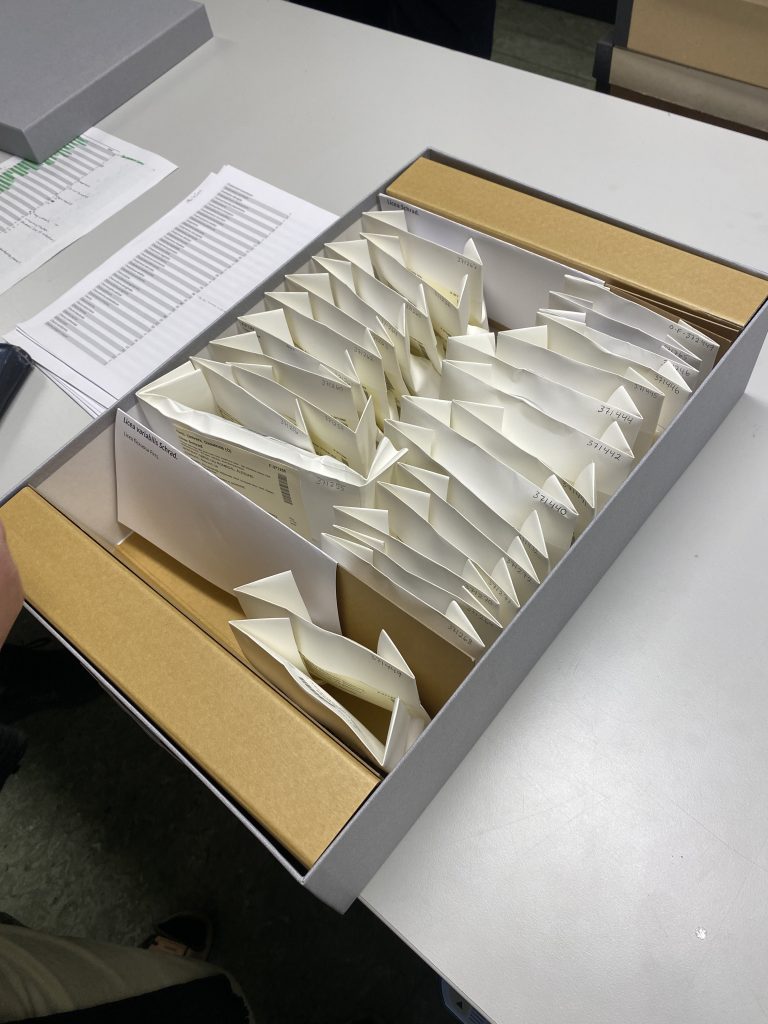
Vi fikk en omvisning i herbariet, der samlingene oppbevares systematisk og med stor grad av nøyaktighet. Det er alltid fascinerende å se hvordan slike samlinger organiseres; med alt fra etikettering og arkivering til å sikre langtidsbevaring.
Siri ga oss et godt innblikk i de praktiske sidene ved samlingsforvaltningen: hvordan materialet registreres, vedlikeholdes og gjøres tilgjengelig for forskning. Det var spesielt interessant å sammenligne deres rutiner med våre egne arbeidsprosesser.
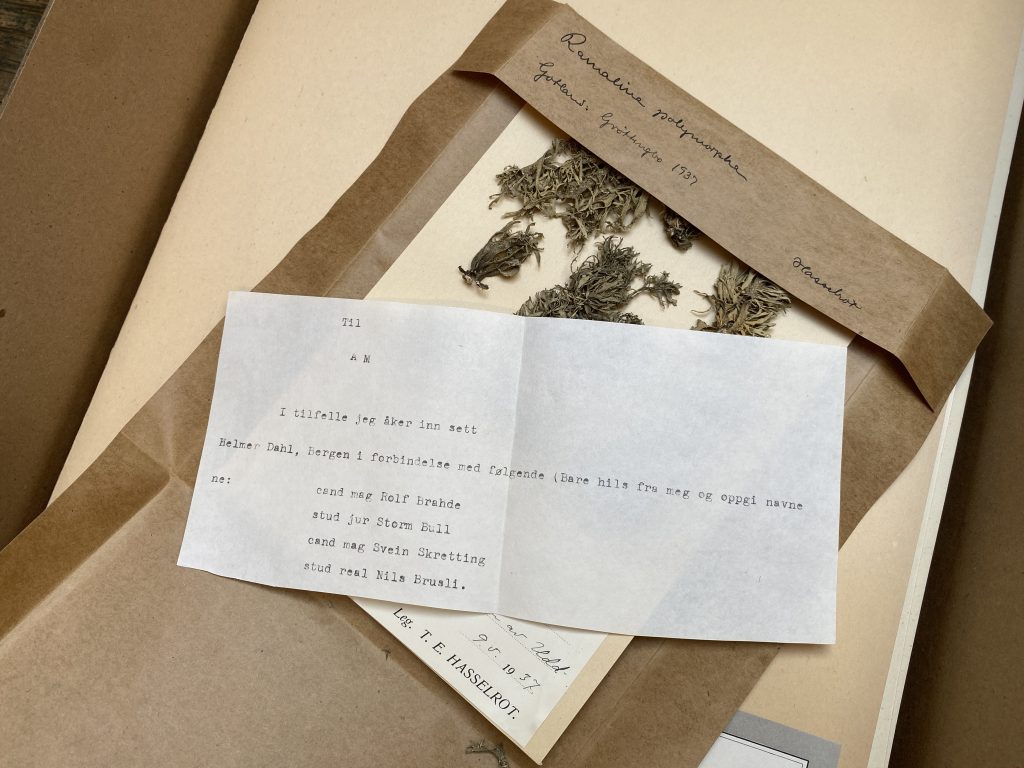
En spesielt minneverdig detalj fra besøket var da Siri viste oss et brev fra andre verdenskrig som hadde blitt skjult blant herbariematerialet. Brevet hadde vært brukt til å kommunisere i hemmelighet, og gir et unikt innblikk i hvordan samlingene også har hatt en rolle langt utover det rent vitenskapelige. Slike historier gir en ekstra dimensjon til arbeidet med samlingene; de rommer ikke bare naturhistorie, men også menneskelig historie.
Digitale løsninger og samarbeid
Som del av Specify-miljøet var det naturlig også å snakke om digitale samlingssystemer og hvordan disse brukes i praksis. Slike møter gir verdifulle perspektiver på hvordan ulike institusjoner løser lignende utfordringer, og bidrar til videre utvikling gjennom erfaringsutveksling.
En fin avslutning i vårsolen
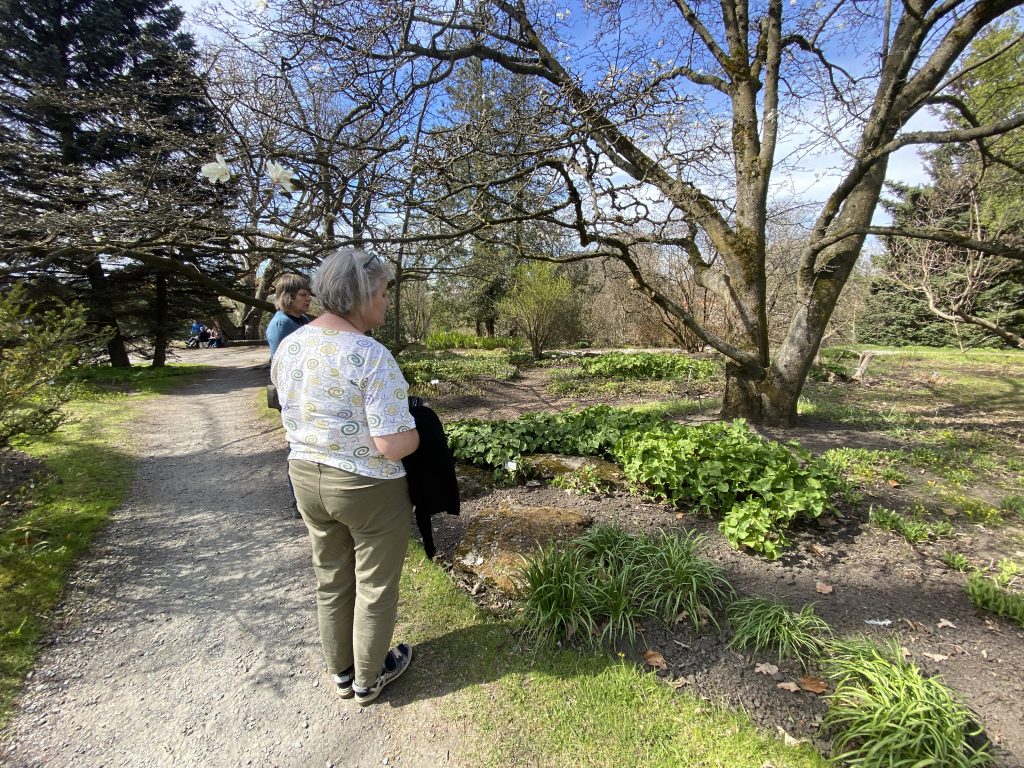
Etter en innholdsrik dag inne i samlingene fikk vi også muligheten til å oppleve de levende samlingene. Sammen tok vi en tur ut i Botanisk hage, der vi kunne nyte den tidlige vårsolen og se hvordan naturen var i ferd med å våkne til liv.
Denne avslutningen gjorde besøket ekstra vellykket; en fin balanse mellom faglig fordypning og naturopplevelse!
Et nyttig og hyggelig besøk
Besøket ved herbariet i Oslo var både faglig nyttig og sosialt hyggelig. Det er alltid inspirerende å se hvordan andre institusjoner arbeider for å ta vare på naturhistoriske samlinger, og ikke minst å møte kolleger som deler samme interessefelt.
Turen bekreftet at det ofte er de små “ekstra” avstikkerne, som dette besøket etter seminaret på Gardermoen, som gir størst faglig utbytte.